





MTD Multiple Income Streams: Combining Self-Employment and Property Income
Many taxpayers affected by Making Tax Digital for Income Tax Self Assessment (MTD for ITSA) have more than one source of income.
For example, someone may be self-employed and also receive rental income from property. Others may run more than one business or own rental property jointly with another person.
Because of this, many people ask how qualifying income is calculated when there are multiple income streams.
According to HMRC guidance, eligibility for MTD for ITSA is based on total qualifying income from self-employment and property combined. This means that income from multiple businesses and property sources must be added together to determine whether the MTD threshold applies.
HMRC also explains that qualifying income is based on gross income before expenses.
Understanding how different income sources combine can help you determine whether MTD for ITSA applies to you.
What Counts as Qualifying Income for MTD for ITSA?
According to HMRC guidance, qualifying income includes gross income from:
• self-employment
• UK property income
• foreign property income (in some circumstances)
When HMRC determines whether someone falls within the scope of MTD for ITSA, it usually looks at the gross income before expenses from these sources.
This means that if you earn income from both self-employment and property, those amounts must normally be combined when calculating qualifying income.
Example: Self-Employment and Property Income Combined
| Income source
|
Gross income (before expenses) |
| Self-employment business | £35,000 |
| UK rental property | £18,000 |
| Total qualifying income | £53,000 |
In this example, the individual’s qualifying income is £53,000. For MTD purposes, HMRC considers the combined income from self-employment and property, not each source separately.
Multiple Self-Employment Businesses
Some people operate more than one self-employment activity. For example, someone might run a freelance web design business and also sell handmade products online. HMRC states that all self-employment income must be combined when determining qualifying income.
Example
| Business | Gross income (before expenses) |
| Freelance web design business | £28,000 |
| Handmade products business | £24,000 |
| Total qualifying income | £52,000 |
Even though these are separate businesses, the qualifying income is £52,000, because HMRC combines the income from all self-employment activities. However, if a person has more than one business, separate digital records and quarterly updates are required for each business under MTD.
Jointly Owned Property and Qualifying Income
Many landlords own property together with a spouse, partner or another individual. In these cases, rental income is usually shared between the owners, and each person reports their share of the income.
When calculating qualifying income for MTD, you generally include your share of the property income, not the total rent received.
| Income source | Amount used for MTD (qualifying income) |
|---|---|
| Joint rental property (your share) | £20,000 |
| Self-employment income | £32,000 |
| Total qualifying income | £52,000 |
In this example, the property generates £40,000 in rent but is owned equally by two people. The individual includes their £20,000 share of the property income when working out their qualifying income for MTD. They then add this amount to their £32,000 self-employment income, giving a total qualifying income of £52,000.
HMRC also notes that in some situations, if a taxpayer only receives their share after expenses have already been deducted, HMRC may use that amount when determining qualifying income.
What Income Is Not Included in Qualifying Income?
A common misunderstanding is that all income reported on a Self Assessment tax return counts toward the MTD threshold. HMRC explains that qualifying income for MTD for ITSA only includes income from self-employment and property.
Other types of income do not count toward the threshold. Examples include:
• employment income (PAYE)
• dividends
• savings interest
• pension income
These types of income may still need to be reported on a final declaration, but they do not count toward qualifying income for MTD.
Example: Income That Does Not Affect the MTD Threshold
| Income type | Amount | Included in qualifying income |
| Self-employment income | £31,000 | Yes |
| Property rental income | £17,000 | Yes |
| Employment income (PAYE) | £22,000 | No |
| Dividends | £4,000 | No |
| Total qualifying income | £48,000 | — |
Although the individual’s total income is £74,000, their qualifying income for MTD purposes is £48,000, because employment income and dividends are excluded.
Keeping Digital Records for Multiple Income Streams
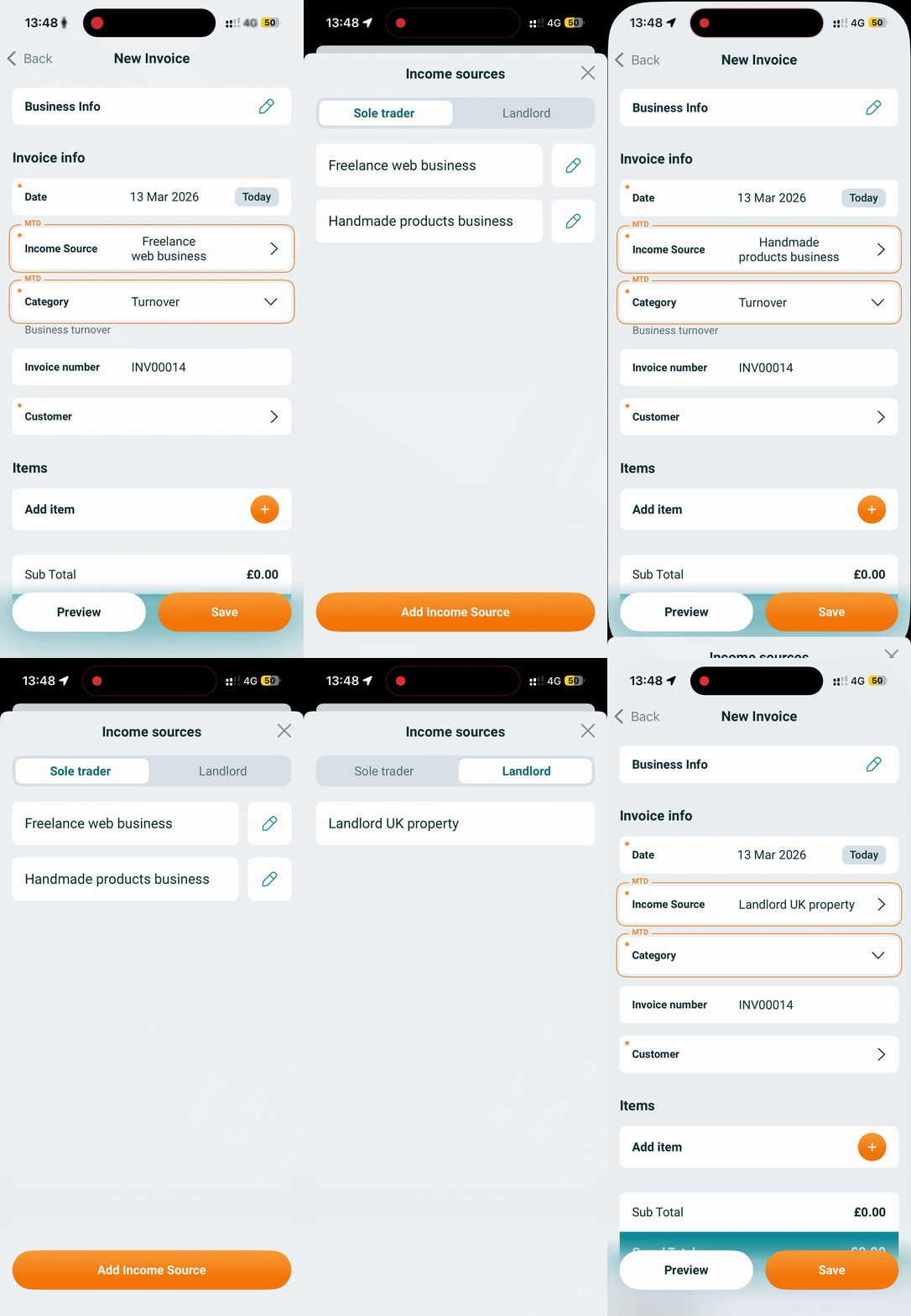
Under MTD for ITSA, taxpayers must keep digital records of income and expenses using compatible software. If you have multiple income sources:
• each self-employment business must normally have its own digital records
• UK property income is usually treated as one UK property business
• foreign property income is usually treated as one foreign property business
Quarterly updates are submitted to HMRC using HRMC-recognized app as EasyInvoice. See below how easily you can assign each income or expense record to the correct income source in EasyInvoice.
Final Thoughts
For MTD for ITSA, HMRC determines whether you need to join the system based on total qualifying income from self-employment and property combined.
This may include:
• income from multiple self-employment businesses
• income from UK property
• income from foreign property
• your share of income from jointly owned property
Understanding how these income streams combine can help you determine whether MTD for ITSA applies to you and prepare your digital records correctly.
If you’re looking for EasyInvoice for landlords and sole traders in the UK, download the app today


